
Insurance capital occupies a distinctive and increasingly important place in private markets. Insurers oversee enormous pools of assets, but they approach alternatives through a different lens than many traditional institutional investors. Cash flows, liabilities, capital charges, risk management and asset origination all influence how capital can be deployed—and which managers are positioned to receive it.
For private markets firms, that makes insurance a potentially significant but sometimes misunderstood source of capital. An insurer may be evaluating not only whether a fund can generate attractive returns, but whether the manager can provide access to specific assets, originate opportunities elsewhere in the organization or support broader investment objectives across multiple pools of capital.
The insurance market itself is also far from monolithic. EquiTrust Life Insurance Company is privately held. MassMutual operates as a mutual company whose policyowners are its owners. New York Life owns Apogem Capital, a private markets platform managing roughly $44 billion across private equity and private credit. Those structures can influence investment priorities and how external relationships are constructed.
For diverse and emerging managers, understanding those distinctions matters. The most effective approach to insurance capital may begin not with the fund a manager wants to raise, but with the investment problem the insurer is trying to solve.
Start With the Balance Sheet, Not the Fund
Insurance investing begins with a fundamental responsibility: generating returns while maintaining assets capable of supporting obligations to policyholders. Insurers aren’t simply selecting attractive funds; they construct portfolios where cash flows, risk and liabilities must ultimately work together.
That discipline is evident at EquiTrust, where Chief Investment Officer Kenyatta Matheny oversees an investment team that directly sources roughly 80% to 85% of the insurer’s balance-sheet investments. External partnerships fill a smaller but strategically important portion of the portfolio, particularly when outside managers can provide access to specific assets or origination capabilities.
“For us, everything starts with the underlying asset and its cash-flow profile,” Matheny said. EquiTrust can then identify originators around an attractive asset type and determine how those investments should sit on its balance sheet. In some cases, those bespoke relationships have helped managers develop new products, deepen their capabilities and accelerate their growth.
For GPs, the implication is significant. The most productive conversation with an insurer may begin with its liabilities and the assets required to support them. A manager capable of addressing an origination need can become more than another investment option—it can become a source of assets the insurer cannot efficiently generate on its own. For specialized managers, differentiated expertise or sourcing networks can therefore become an advantage rather than a constraint.
“For us, everything starts with the underlying asset and its cash-flow profile.”
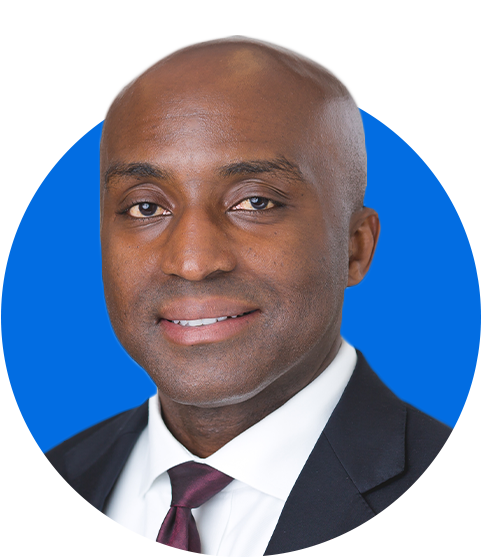
Kenyatta Matheny, Chief Investment Officer, EquiTrust
“For us, everything starts with the underlying asset and its cash-flow profile.”
Kenyatta Matheny, Chief Investment Officer, EquiTrust
Matheny’s approach illustrates how the process works. EquiTrust periodically holds thematic sessions to identify where the insurer needs exposure, why an asset is attractive, and how to originate it. That process previously led the company into student loans through relationships with two large originators and, more recently, into royalties after EquiTrust identified an attractive cash-flow profile and sought an appropriate originator.
Investment need drives the search rather than manager category. Sometimes it leads to a diverse firm; other times to one of a market’s largest originators. EquiTrust’s investment team has also expanded into EquiTrust Principal Investment Company, which manages assets for other insurers. More balance sheets and liabilities create more demand for suitable assets—and potentially more opportunities for managers who can originate them.
Institutional Rigor as Capacity Building
The opportunity comes with demanding institutional requirements. Insurance companies are fundamentally risk-management organizations, and that discipline extends into manager selection. Private equity and venture investments can also carry significant capital charges, increasing the importance of understanding both investment risk and the operational infrastructure supporting a manager.
“We can’t offer a separate-but-unequal process.”
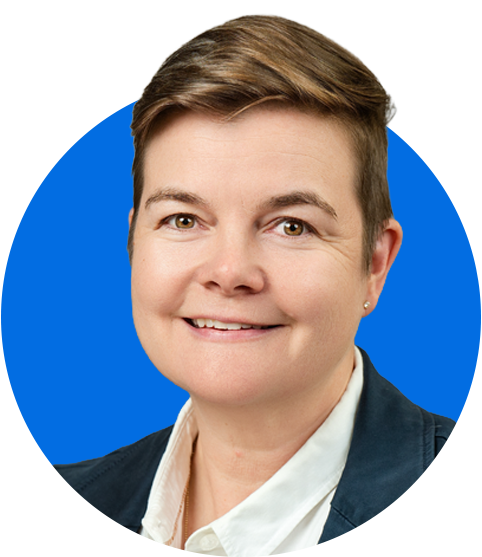
Liz Roberts, Head of Impact Investing, MassMutual
At MassMutual, some emerging managers are receiving their first institutional capital, so the insurer’s operational due diligence may be more rigorous than anything it has previously encountered. The process examines areas such as cash controls, policies and procedures that a young investment organization may not have needed to formalize.
The objective isn’t to create a lower standard for smaller managers. “We can’t offer a separate-but-unequal process,” said Liz Roberts, Head of Impact Investing at MassMutual, where she has helped build the insurer’s emerging-manager program across multiple asset classes. Emerging managers undergo the same fundamental institutional scrutiny as established firms, even if the specific diligence materials differ.
Seen narrowly, that process can look like another barrier to institutional capital. Over a firm’s life, it can function as capacity building. A manager who strengthens controls, formalizes procedures, and successfully navigates sophisticated operational diligence is better prepared to attract subsequent institutional investors. MassMutual has seen family offices increase prospective commitments after learning the insurer had invested.
“We can’t offer a separate-but-unequal process.”
Liz Roberts, Head of Impact Investing, MassMutual
That suggests a broader role institutional LPs can play in developing the emerging-manager ecosystem. Expanding access does not have to mean lowering investment standards. Helping promising managers build the infrastructure needed to meet those standards can strengthen the organization for future fundraising rather than facilitate only one allocation.
The experience of Ivelisse Rodriguez Simon, Managing Partner of Avante Capital Partners, a majority women- and diverse-owned private credit firm delivering flexible capital solutions to high-quality lower middle market businesses since 2009, reinforces the point. Avante’s conversations with insurance clients have demonstrated how deeply risk discipline is embedded across these organizations. “It actually helps us understand what we need to do to mitigate risk,” said Rodriguez Simon, who is also a member of the NAIC Board. For a GP, meeting those expectations can be difficult, but the process can also make a manager more durable and institutionally competitive.
“It actually helps us understand what we need to do to mitigate risk.”
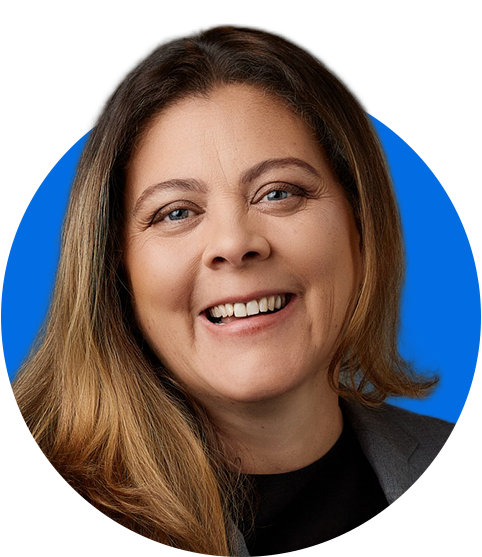
Ivelisse Rodriguez Simon, Managing Partner, Avante Capital Partners
“It actually helps us understand what we need to do to mitigate risk.”
Ivelisse Rodriguez Simon, Managing Partner, Avante Capital Partners
The Relationship Can Be Worth More Than the Commitment
The economics of an insurance relationship can extend well beyond the fund an insurer initially invests in. Large insurance organizations often contain multiple investment businesses and pools of capital. A GP relationship that begins in private equity can consequently create opportunities in private credit, co-investments or elsewhere in the organization.
That interconnected model is central to Apogem Capital. About half of the firm’s assets are in private credit, including direct lending to middle-market sponsored transactions, while the other half is in private equity strategies. When Apogem evaluates a private equity manager for New York Life, investment performance remains fundamental, but it isn’t the only measure of potential value. The firm also considers whether the GP can generate deal flow for its direct-lending business and provide co-investment opportunities. The firm sets expectations for those opportunities when relationships begin and tracks them over time.
“We’re not expecting all three cylinders firing, but being open to those relationships makes us lean in further.”

Stephanie Park, Director, Apogem Capital
That changes the calculus of manager selection. Two firms with comparable strategies and returns may not offer equivalent value if one can generate opportunities across several parts of the insurer’s investment platform. A fund commitment can become the starting point for a much broader economic relationship.
Stephanie Park, Director at Apogem Capital, invests across primary funds and co-investments, focusing on middle- and lower-middle-market buyout managers. She noted that emerging managers aren’t expected to arrive with every capability fully developed. “We’re not expecting all three cylinders firing, but being open to those relationships makes us lean in further,” Park said. That openness can increase the partnership’s potential value as the manager grows.
The institutional network can extend farther still. MassMutual owns Barings, which manages a significant portion of its general investment account alongside the insurer’s internal team. As Roberts observed, talking to one person within an insurance organization can effectively mean talking to several asset managers. Understanding that broader ecosystem—and where a GP can create value within it—should therefore be part of a manager’s preparation.
“We’re not expecting all three cylinders firing, but being open to those relationships makes us lean in further.”
Stephanie Park, Director, Apogem Capital
Expanding the Search for Alpha
For diverse and emerging managers, the opportunity becomes more compelling when connected to investment performance and differentiated access rather than treated as a separate allocation objective. MassMutual’s emerging-manager program illustrates how widening the manager universe can become part of an institution’s search for new sources of return and innovation.
MassMutual’s approach is also rooted in its structure. As a mutual company, its policyowners are its owners. Roberts connects that governance model to an impact strategy that views inequality as a systemic risk to society, the economy and ultimately MassMutual’s business. Helping people build wealth and live longer, healthier lives can therefore align broader outcomes with the insurer’s long-term interests.
What began five years ago as a $50 million effort to test that investment thesis has expanded to $500 million invested directly in companies and across 28 emerging-manager funds.
One of the most consequential elements of Roberts’ argument is her rejection of the notion that underallocation to diverse managers primarily reflects a shortage of investable firms. She characterizes it instead as a process opportunity. If talented managers exist but consistently remain outside institutional portfolios, investors should examine the mechanisms that determine who gets access and serious consideration.
That shifts attention from manager supply to institutional behavior. Sourcing networks, diligence practices and established relationships can influence which firms enter the opportunity set long before a final allocation decision. Large institutions naturally gravitate toward familiar managers, but familiarity and opportunity aren’t necessarily synonymous. Looking beyond conventional networks can expose investors to strategies, markets and sourcing channels that established allocation patterns may miss.
For MassMutual, widening that aperture also means deploying resources beyond investment dollars. Its investment with Apis & Heritage provides a tangible example. The strategy involves ESOP financing, where MassMutual can contribute through its rating capabilities while its wealth-management organization encounters business owners considering employee ownership as part of succession planning.
The result is connectivity between the investment strategy and MassMutual’s broader enterprise. For emerging managers, it demonstrates why the identity of an LP can be nearly as important as the size of its commitment. The right institutional partner can potentially provide credibility, expertise, networks and commercial opportunities alongside capital.
Where Insurers Are Looking
The search for new managers isn’t theoretical. Apogem regularly meets with managers raising first- and second-funds in the $150 million to $300 million range and remains an active believer in the lower-middle and middle markets.
That interest is grounded in experience. Park said an internal analysis of portfolio exits over the previous decade found that a significant share had been realized at more than 5x gross MOIC. The findings reinforced Apogem’s belief that it can generate meaningful alpha in the lower-middle market despite greater volatility.
Apogem has institutionalized that search by dedicating personnel to origination and business development, including identifying professionals spinning out of established organizations to launch new firms. The implication for emerging managers is important: some large insurance-affiliated investors aren’t waiting for firms to become sufficiently established to enter traditional networks. They are actively looking for them.
EquiTrust’s needs are also expanding. Matheny expects his investment team to grow as the company continues sourcing assets internally and across multiple insurance balance sheets. That growth creates a continuing requirement for origination and leaves the organization receptive to ideas from the market.
The common thread is that emerging and diverse managers are most compelling when their capabilities align with an identifiable investment need. The strongest proposition isn’t simply that an insurer should allocate to the firm. It is that the manager possesses specialized sourcing, differentiated expertise or access to markets that can help the insurer accomplish something it cannot accomplish as effectively on its own.
A Market Still in Motion
The opportunity is developing against a changing backdrop. The past several years have brought greater scrutiny of ESG, responsible investing, and DEI, but Park sees a distinction between changes in terminology and investment behavior. Firms may be less likely to use particular labels publicly while continuing the underlying work.
Roberts sees another source of momentum inside institutions themselves. Younger employees are attracted not only to investment returns and measurable performance but also to examples of capital that produces broader economic and social outcomes. Matheny’s optimism comes from the insurance business itself, including opportunities to engage younger consumers earlier in their financial lives. Growth in insurance products ultimately creates additional premium—and additional assets that must be invested.
Those observations point to several forces moving simultaneously: insurers are searching for assets, investment platforms are expanding their origination capabilities, institutions are widening their manager networks, and emerging firms are becoming increasingly sophisticated in meeting institutional requirements.
For diverse and emerging managers, the question therefore becomes less about persuading an insurer to allocate and more about understanding what that insurer needs from its capital. That shifts the conversation from “How do we get into the portfolio?” to What investment problem can we help solve?
The distinction shifts the relationship from fundraising to partnership and lets managers compete on the attributes that ultimately matter in private markets: differentiated expertise, sourcing, institutional discipline, investment performance and the ability to create value across an investor’s broader ecosystem.
Insurance capital may be demanding by design, but for managers who understand the balance sheet behind the allocation, the opportunity isn’t simply to raise another fund—it is to help some of the world’s largest pools of capital find, structure and create their next generation of investments.